
Converted Campervan Insurance
Find An Insurance Quote For Your Converted Campervan Today
Converted campervans come in all shapes and sizes, so why shouldn't you have specialist insurance to suit?
If you have converted a van, are partway through a build, or are planning one, your vehicle needs cover shaped around the conversion. A finished camper is worth far more than the shell it started as, and the time and money you have put in need protecting. Advance arranges cover for self-build, DIY and professionally converted campervans.
We have arranged specialist motor cover for more than 90 years, working with insurers who understand conversions. Van conversion insurance sits alongside our wider motor range, from motorhome insurance to car insurance. This page is for converted and self-built vehicles. If yours is factory-built, or you want general cover, our main campervan insurance page is the place to start.
What Is Converted Campervan Insurance?
Converted campervan insurance covers a vehicle that has been changed from a standard van into a camper. It helps protect the base vehicle, the conversion work, and the fixtures and fittings inside. A standard van insurance policy rarely accounts for the build, so it can leave you underinsured after a fire, theft or accident.
A converted vehicle needs vehicle insurance built around the finished result, not an empty-shell rate. Specialist policies value the bed, the units, the electrics and everything else that made it a home on wheels. Converted campervan insurance policies vary between insurers, so it pays to compare what each one includes.

Self-Build and DIY Conversions
A DIY build is a camper you have fitted out yourself, over months or even years. It is often a labour of love, and no two are alike. Self-build campervan insurance is arranged on the finished value, so the cover reflects the work you have actually done.
Keep a clear record as you go. Receipts, photographs and a running list of what you have fitted all help set the right value. They also make a future claim far smoother, since you can show exactly what was built in. For a DIY conversion, this record is your protection.
Professional Conversions and Self-Built Campers
A professional conversion is carried out by a specialist firm, with the work documented and invoiced. This makes the vehicle easier to value, since there is a clear paper trail. A self-built camper needs the same care, with your own records standing in for the converter’s invoices.
We arrange campervan conversion insurance for both routes. Professional and home-built campervan conversions are equally welcome, so what matters is that the policy reflects the finished vehicle and everything fitted to it. Declare the work fully, however it was done, so the cover matches the result.
Can I Insure a Vehicle That Is Still Being Converted?
Yes. A vehicle does not have to be finished to be insured, and insurance cover during the build is worth having. A part-completed build still holds a base vehicle, tools and part-fitted equipment, all of which can be lost or damaged. Insuring it as work progresses helps protect that growing investment.
Tell your broker where the build has reached. As the build moves on, the value changes, so the cover may need updating. It is worth reviewing your insurance policies once the build is finished, so the sum insured matches the finished build rather than the half-built one.
Declaring Modifications and Changes
A conversion is, in insurance terms, a series of modifications. Every change from the standard specification should be declared, from a pop-top roof and windows to the electrics, gas and interior. On a converted vehicle, much of what makes it useful is technically a modification.
Declaring everything helps protect you. An insurer prices the risk on what is actually fitted, and an undeclared change can affect whether a claim is paid. If you add to the build later, such as solar panels or a bike rack, tell your insurer at the time rather than waiting for renewal.
What Does the Cover Include?
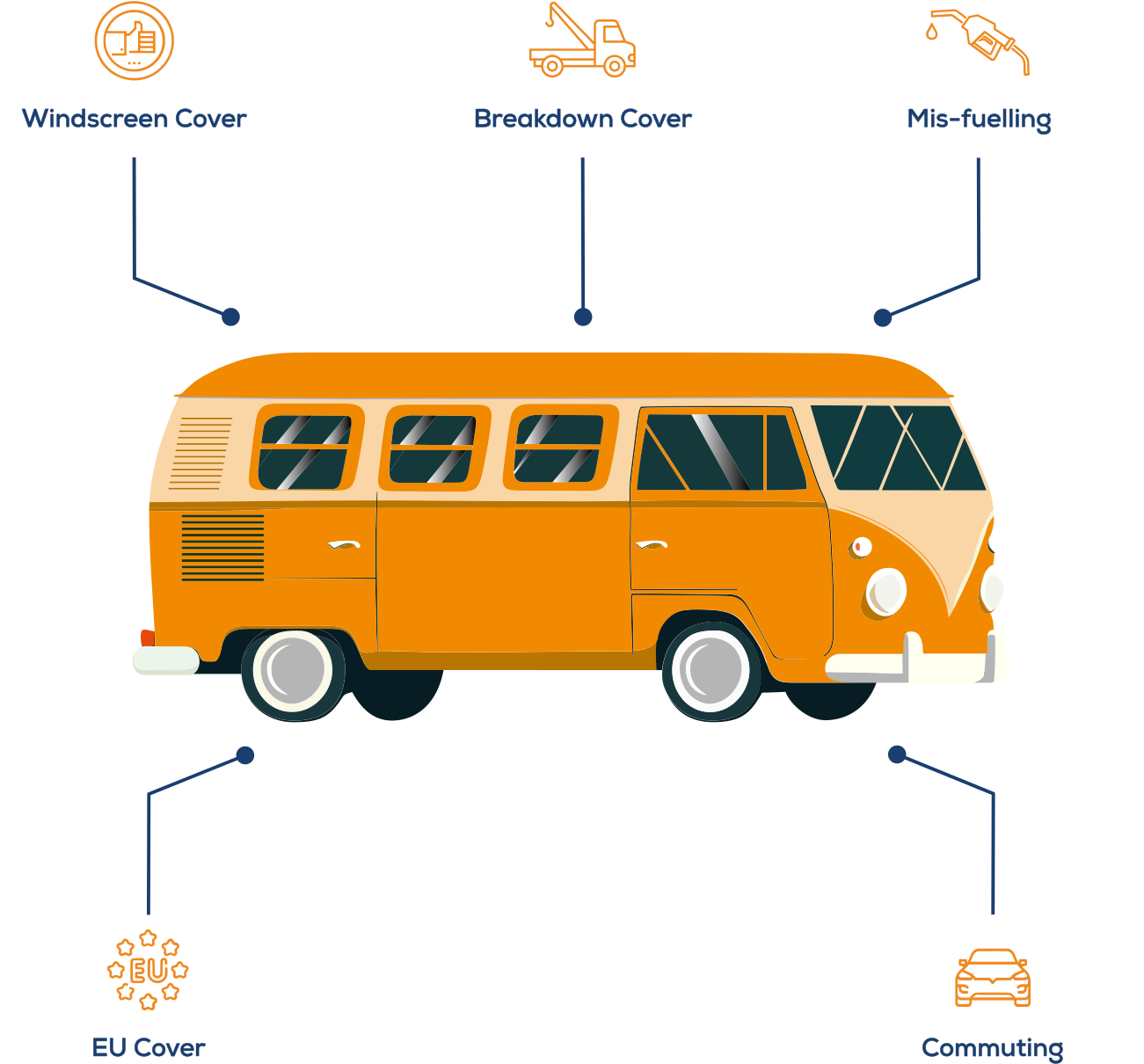
Insurance policies can be built around your vehicle and how you use it. Features available include:
- Windscreen cover
- Breakdown cover
- Mis-fuelling
- EU cover
- Commuting
Which of these you need depends on the vehicle and your plans. If you commute in it, use it for touring, or drive it across the Channel, say so up front, so the policy is set up correctly from the start.
How Is Your Build Valued?
Valuing a converted vehicle is not as simple as looking up a used price. The base vehicle is only part of the picture, and a good build can add thousands to the real worth. This is why your records matter so much.
Ask your broker how yours would be valued after a total loss, and whether agreed value is available for your build. Agreed value fixes the figure with the insurer in advance, which suits a self-built van or a rare build where a standard valuation could fall short. If the worst happens, you can make a claim through our dedicated team.
What Affects the Cost?
There is no single insurance cost for a converted camper, because so much depends on the vehicle and the driver. The finished value, the base vehicle, how it is stored, your mileage and your claims history all play a part. Insurance policies are priced individually, so no two quotes are alike. A specialist insurance broker can weigh these up and find terms that suit the build rather than a plain van rate.
What Do You Need to Get a Quote?
A few details make a quote quicker and more accurate. Having them ready helps the insurer value the build correctly.
It helps to have:
- The base vehicle registration, make, model and year
- Who carried out the conversion, or that you built it yourself
- A list of the work done and equipment fitted
- Photographs and receipts for the build
- The estimated value of the finished vehicle
- Where it is kept overnight, and your annual mileage
- The driving history of everyone who will drive it
Why Choose Advance Insurance?
Advance Insurance arranges cover for converted and self-built vehicles through a panel of insurers, so the policy reflects your build rather than a standard template. Our service includes:
- 90+ years’ experience in specialist insurance
- Allocated customer service team
- Knowledge of conversions and self-built vehicles
- Access to a panel of specialist insurers
- Dedicated claims team
Converted Van Insurance: FAQs
Not always as standard. Fixtures and fittings are treated as part of the build, but loose items such as gadgets, bikes and camping gear may need separate contents or personal effects cover. Check the limits and ask what is included before you rely on it.
That depends on the weight, not the conversion itself. Most campervans up to 3,500kg can be driven on a standard car licence, while a heavier build may need category C1. Check the plated weight once the fit-out is finished, since the extra kit adds weight.
You need cover that reflects the conversion, not just the base vehicle. Ask the seller for any records of the work and photographs. If it was a professional conversion, invoices help. If it was a previous owner’s self-built van, gather as much detail as you can to support the value.
They overlap, but the base vehicle usually decides it. A converted van is normally insured as a campervan, while a coachbuilt or A-class is treated as a motorhome. If you are not sure which fits your vehicle, ask before you arrange cover.
Contact Us
Talk to the Advance Insurance team about cover for your converted or self-built vehicle, at whatever stage it has reached. We will build a quote around the base vehicle, the build and how you use it. Get a quote to get started, or request a call back and we will be in touch.
Insurance Advice Hub